
Fahid Island: The Abu Dhabi Island Investors Are Still Underestimating
Fahid sits between Saadiyat and Yas and already ranks among the four districts absorbing most of Abu Dhabi's off-plan apartment money. Here is what is confirmed, and what is still a bet.
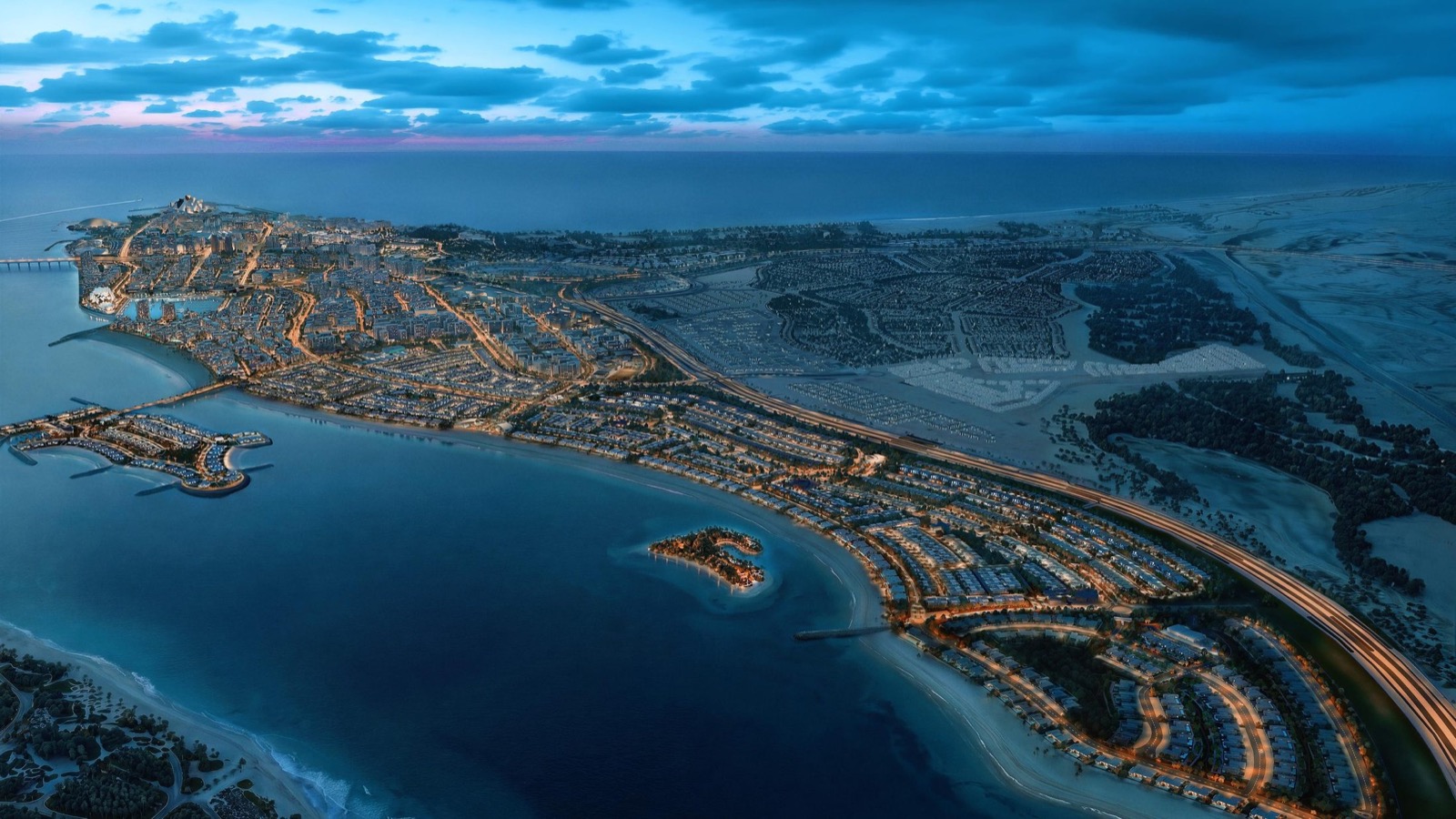
Most investors I speak to can place Saadiyat, Yas and Reem on a map without hesitating. Fahid Island still gets a pause.
That gap between recognition and reality is worth examining, because on at least one measure Fahid is no longer an obscure address.
The one hard fact that should change your mental model
In its H1 2026 report, ADREC identified the four districts that between them absorbed 84% of all off-plan apartment sales value in the emirate: Saadiyat Island, ADGM (Al Reem and Al Maryah), Yas Island — and Fahid Island.
Read that again in context. Off-plan was 89% of residential sales value in Abu Dhabi in that half-year, and off-plan apartment sales grew 220% year on year. Fahid is one of the four places where that money went.
An island that most private investors could not confidently locate a year ago is sitting in the same bracket as Saadiyat and Yas for off-plan apartment absorption. That is the fact worth starting from — it is measured, published and attributable, unlike almost everything else written about Fahid at the moment.
The geography, which is the whole argument
Fahid sits between Saadiyat Island and Yas Island, with beachfront on the Gulf.
That position does something specific. Saadiyat is the cultural and prime-residential island. Yas is the entertainment and leisure island — Ferrari World, the Marina Circuit, the parks, the arenas. Fahid is the land between them.
In every mature city, the parcel between two established destinations eventually gets developed, and it typically gets developed later than its neighbours and therefore to a newer standard. Being last in a sequence is not a disadvantage if the surrounding demand drivers already exist. You inherit the neighbours' amenities without having waited through their construction periods.
That is the honest core of the Fahid case: it is beachfront land, in the middle of the two islands that already generate Abu Dhabi's leisure and cultural demand, being planned now rather than fifteen years ago.
Separating what is announced from what is a bet
I want to be careful here, because Fahid attracts more speculation than most Abu Dhabi addresses, and a lot of what circulates about it is not sourced.
What is confirmed
- Its position between Saadiyat and Yas, with beachfront.
- That it is being developed as a new masterplanned island district, with residential product currently being sold off-plan.
- That ADREC's own data puts it among the four largest districts by off-plan apartment sales value in H1 2026.
What is a bet, and should be modelled as one
- The pace and completeness of the masterplan. A masterplan is a stated intention. What gets delivered, and in what order, is the thing that determines whether you live next to a finished district or a construction site in year five.
- Which specific attractions arrive, and when. I would not price any unopened venue, museum or attraction as though it were operating. If a broker tells you a named attraction is coming to Fahid, ask for the official announcement and the stated date. If neither exists, treat it as a rumour with a price tag attached.
- The connectivity build-out. Being between two islands is only valuable if the roads and crossings make it feel between them rather than beyond them.
How I would actually approach it
Treat the ADREC number as evidence of liquidity, not of value. A district absorbing a lot of off-plan money means there is a functioning market with real buyers — which is genuinely useful, because it suggests you will have counterparties when you exit. It says nothing about whether today's price is the right price. High volume and full pricing frequently coexist; H1 2026 was a record half-year for Abu Dhabi, not a cheap one.
Understand who you will be selling to. Off-plan concentration in four districts means a lot of similar paper will come to market in the same window. On Fahid specifically, ask what proportion of the current buyer base is end-user versus investor. A district that is predominantly investor-owned at handover has a harder first resale cycle.
Weight beachfront heavily. If the long-run thesis for Fahid is its position and its coastline, then the assets that express that thesis most directly are the ones on the water. Interior product in a new island district competes with interior product everywhere else in the emirate — and there is a lot of it coming.
Ask what happens in 2028. Abu Dhabi's delivery pipeline peaks in 2028, with about 67,500 new homes in the Abu Dhabi Region by 2030. Any new island's first real test is what its resale market looks like when a large volume of competing stock completes at once.
Where I land
I think Fahid is genuinely underestimated by private investors relative to the position it already holds in the official transaction data. The location argument is strong and does not depend on anything unannounced happening.
But "underestimated by investors" is not the same as "underpriced". Those are different claims, and only the first one is supported by what I can verify. The correct posture, in my view, is to take Fahid seriously as a location, and to be unusually strict about paying only for what has actually been announced.
If you are looking at a specific Fahid release and want the official position on what is confirmed versus marketed, send it to us and we will go through it line by line.
Analysis and opinion by Astana Real Estate / Yeldar Nurmukanov. Market conditions, prices and availability can change. This is general information, not investment, tax or legal advice.
Sources
- Abu Dhabi Real Estate Centre (ADREC), Abu Dhabi Real Estate Market Report H1 2026 — Fahid Island named among the four districts taking 84% of off-plan apartment sales value