
Where I Would Be Careful Buying Off-Plan in Abu Dhabi
Not a blacklist. These are the five risks I actually model before recommending an off-plan purchase in Abu Dhabi — and the conditions under which each of them stops mattering.
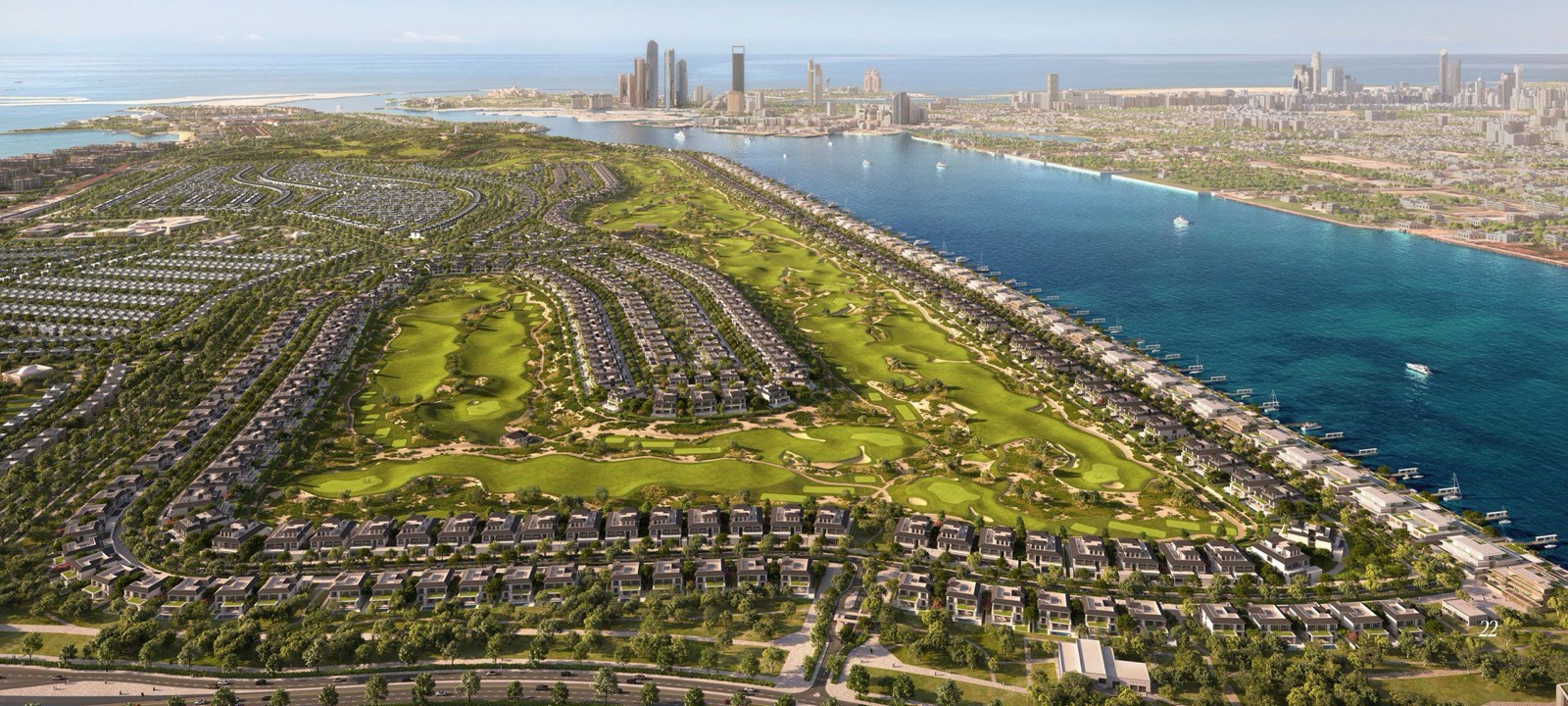
This is an opinion piece. It is not a list of bad projects, and nothing here says any named development is a poor investment — several of them are ones we sell.
What it is: the five risks I put into a model before I let a client commit to an off-plan purchase in Abu Dhabi, why each one is currently live, and what would make me stop worrying about it. Every factual figure comes from ADREC's official H1 2026 report; the judgements are mine.
First, the context that makes this worth writing
The first half of 2026 was the strongest on record for Abu Dhabi. AED 117 billion transacted, up 112% year on year. Residential sales of AED 70.4 billion against AED 25.3 billion a year earlier. Apartment resale prices up 20% in twelve months, having been up 15% the year before — so the rate of increase itself accelerated.
A market like that is not a reason to stay out. It is a reason to be precise, because in a rising market the cost of a bad entry is hidden for a while and then arrives all at once.
Risk 1 — Concentration
The number: 84% of all off-plan apartment sales value went to four districts: Saadiyat, ADGM (Reem and Maryah), Yas and Fahid. Ten developers took roughly 90% of off-plan primary sales — AED 51 billion. The ten largest projects alone were 43% of all residential value.
Why it matters. When you buy off-plan in one of those four districts, you are buying into the deepest, most liquid part of the market — genuinely an advantage. You are also buying into the part where the most similar product will complete at the same time, and where every other investor made the same decision you did.
Concentration is not a defect. It is a trade: liquidity now, correlated competition later. The mistake is enjoying the first half of that trade without pricing the second.
What would stop me worrying: an exit plan that is not "resell to another investor in the handover window". Either a hold long enough to clear the delivery peak, or a unit with a genuine end-user story — a view, a floor, a layout, a berth — that differentiates it from the hundred units behind it.
Risk 2 — Paying full price for the prime cultural addresses
The number: apartments trading above AED 28,000 per square metre tripled in value year on year and now take 46% of the market. ADREC also notes that in most districts maximum prices run two to four times the district average.
Why it matters. Parts of the Saadiyat Cultural District now transact at the top of the emirate's range. The location quality is real and I am not disputing it — the Louvre is open, the university is there, the beaches are there. The question is what is left to re-rate.
When you buy at the top of a range, your return depends almost entirely on the range itself moving up. When you buy in the middle of a wide range with a specific reason why your asset should move toward the top, you have two sources of return instead of one.
What would stop me worrying: buying scarcity of product rather than scarcity of postcode — beachfront, a branded residence with a real operator, a plot type that does not repeat. For standard apartment stock at prime-district pricing, I want the yield maths to work on today's rent, not on an assumed future rent.
Risk 3 — Supply landing all at once
The numbers: about 67,500 new homes in the Abu Dhabi Region by 2030, on top of 409,000 today, with deliveries peaking in 2028 and three quarters of them landing in six districts. Al Reem Island alone is projected at 13,518 homes by 2030. Saadiyat, Reem and Yas account for 75% of all projected new apartments.
Hudayriyat deserves a specific mention — not as a criticism, but because the scale of its move is unusual. Al Hidayriyyat took 27% of all residential sales value in H1 2026: AED 19.0 billion, eight times the AED 2.4 billion it did a year earlier. An eight-fold increase in a single year is a district being repriced very fast. Fast repricing can be entirely justified by new infrastructure and a new masterplan. It also compresses the window in which you can buy before the story is fully in the price, and it raises the question of how much stock is now committed for delivery into the same period.
What would stop me worrying: knowing what completes in my building's immediate catchment in the eighteen months either side of my handover, and stress-testing rent and resale against that number rather than against today's occupancy.
Risk 4 — Distance from established demand
Why it matters. Abu Dhabi's demand is heavily anchored to a small number of places: the islands, the corniche, ADGM, the university and school cluster, the airport corridor. Inland masterplanned communities — Bloom Living is the example most clients ask me about — offer more house for the money, and for a family that will actually live there that can be exactly the right decision.
The consideration is different if you are buying for investment. Rental demand inland is thinner and more employment-dependent than on the islands, and resale depends on a steady flow of end-user buyers rather than on investors trading with each other. That is not worse; it is a different liquidity profile, and it needs a longer assumed hold.
The relevant ADREC context: 69% of occupied homes in the Abu Dhabi Region are rented rather than owned, and villas produce 26% of rental value from just 14% of occupied homes. Villa product has strong rental economics — but where the tenant works still determines what they will pay to live.
What would stop me worrying: an end-user purchase, or an investment case built on rental yield at a realistic inland rent, with no reliance on capital growth tracking the islands.
Risk 5 — Resale liquidity in the first cycle
The number: in the ready market, 61% of value was paid in cash and 39% mortgaged, with mortgage lending broadly flat at AED 3.1 billion, up 3%.
Why it matters. That tells you the ready market is dominated by cash buyers. If you plan to exit an off-plan unit shortly after handover, your buyer pool is narrower than the headline transaction numbers suggest — mortgage financing is not doing the heavy lifting.
Add the rent freeze: from 2 June 2026, ADREC froze residential rent increases across the emirate, with renewals at 0% and re-let units at the previous contract value. ADGM communities — Al Reem and Al Maryah — are exempt. If your investment case assumed rising rent to support a resale valuation, that assumption needs revisiting outside ADGM.
What would stop me worrying: a payment plan with meaningful post-handover instalments (which widens the buyer pool to people who cannot pay cash outright), or an asset where the income case stands on the current rent.
Where the thesis still works
I want to be even-handed, because everything above can read as pessimism and it is not meant to.
Off-plan in Abu Dhabi still works well when at least two of these are true:
- The payment plan does the work. Paying 40–50% over four years while the asset appreciates is a genuinely favourable structure that the ready market does not offer.
- The product is scarce, not just the location. Waterfront, berths, branded operators, unrepeatable plots.
- You are buying before the story, not after it. The districts that had not yet been repriced in H1 2026 are more interesting to me than the four that absorbed 84% of the money.
- The hold period clears the delivery peak. If you are still holding in 2031, the 2028 supply wave is a buying-cycle event you slept through rather than a wall you sold into.
- The developer has delivered before. Ten developers took 90% of off-plan primary sales. There is a reason.
The one thing I would not do
I would not buy an off-plan unit whose entire case is "prices went up 20% last year". That is a description of the past. ADREC's own report says as much — market data describes what happened and does not predict what will happen.
If you want this framework applied to a specific unit you are considering, send us the project and the price. We will tell you which of the five risks are live on it, and we will tell you when we think the answer is that it looks fine.
Analysis and opinion by Astana Real Estate / Yeldar Nurmukanov. Market conditions, prices and availability can change. This is general information, not investment, tax or legal advice.
Sources
- Abu Dhabi Real Estate Centre (ADREC), Abu Dhabi Real Estate Market Report H1 2026 — all transaction, concentration, price-growth, pipeline and rent-freeze figures cited below
- Astana Real Estate — Abu Dhabi Property Market H1 2026