
How High-Speed Rail Could Affect Abu Dhabi Property Values
Transport infrastructure moves property prices — but not everywhere, not evenly, and not always after you buy. A framework for testing whether a rail story is worth paying for.
"There will be a station here" is one of the most powerful sentences in a property sales meeting. It is also one of the least frequently checked.
Rail infrastructure genuinely does affect property values. The mechanism is real and well documented across many markets. But the effect is narrower, slower and more conditional than the way it usually gets presented — and by the time most retail buyers hear the story, a good part of it is already in the price.
This piece is about how to assess a rail claim, not about predicting one.
Why rail moves property prices at all
Transport infrastructure changes the effective location of a property without moving it. A home forty minutes from the employment centre by car becomes a home twenty minutes away by train. That is a genuine change in what the household can access, and markets price access.
Three things drive the effect:
- Time saved on journeys people actually make. A line that connects your district to somewhere residents genuinely need to go matters. A line that passes nearby on the way to somewhere else does not.
- Reliability, not just speed. Rail's advantage is often that the journey time is predictable, which is worth more to commuters than a slightly faster but variable drive.
- What gets built around the station. The station itself is a box. The uplift usually comes from the retail, offices and density that follow it — which is a second decision by a second set of parties, and it does not always happen.
The most consistent finding across markets is that the effect is hyper-local. It concentrates in a genuine walking radius of the station entrance and decays sharply beyond it. A property "near the new line" that is a fifteen-minute drive from the actual station captures very little of the benefit while paying a good part of the premium.
The UAE picture, stated carefully
Etihad Rail is a real, operating national rail programme in the UAE. Its freight network is running, and passenger services connecting emirates have been announced and developed by the operator.
Beyond that, I am going to be deliberately restrained about specifics, and I would encourage you to be too. The precise station locations, the confirmed opening dates and the final route alignment are things that should come from Etihad Rail or the relevant government authority — not from a brochure, and not from me.
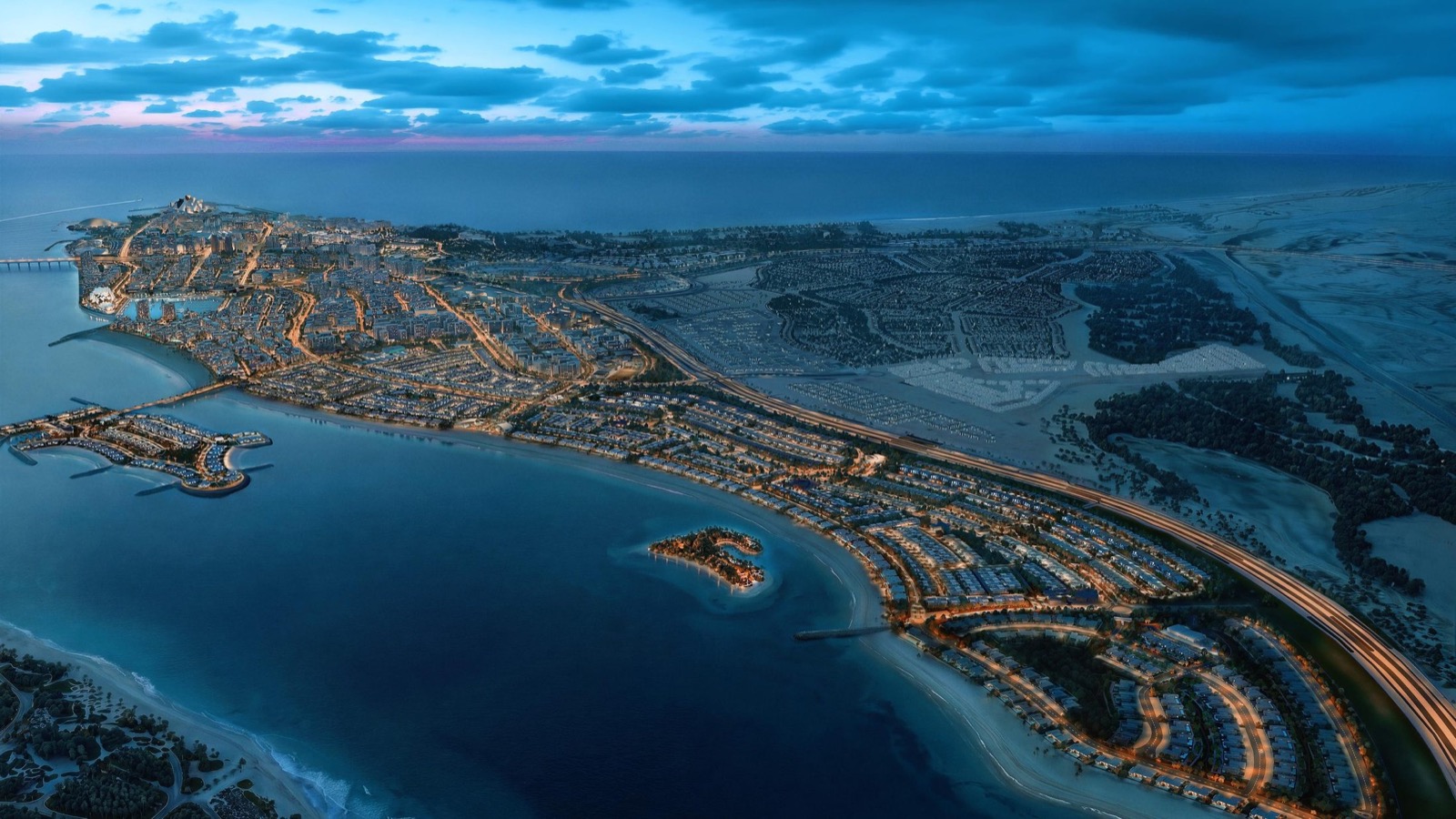
What I can point to from developer materials in our own files: Aldar's project information for Marsa Al Saadiyat references a future Etihad Rail station serving the district. Note the word "future". That is how the developer describes it, and it is how you should hold it.
The test I apply
When a rail story is part of a sales pitch, here is what I actually check.
1. Is the station confirmed, and by whom?
Ask for the source. Not the developer's masterplan render — the operator's or the authority's own published statement. If the only evidence that a station exists is a dot on a marketing map, you are being asked to pay for a dot on a marketing map.
2. How far is it, on foot?
Measure the walk from the actual unit to the actual station entrance, in minutes, at street level. Not straight-line distance, and not drive time. Ten minutes' walk and twenty minutes' walk are completely different assets, and the second one captures very little station premium.
If the honest answer is "you would drive to the station", then the property is not a transit-oriented asset. It may still be a good asset, but it should not be priced as one.
3. When does it open, relative to my handover?
Line the two dates up. If the building completes in 2029 and the station is stated for 2033, you own four years of construction disruption before you own any benefit. That is not a reason to walk away, but it is a reason to expect it in the price rather than to pay for the finished state today.
4. Where does it actually connect to?
A station is only worth what it links you to. Does the line reach the places this property's likely tenants and buyers need to be — the business district, the airport, the university, the other emirate where their office is? A high-speed link between two places your household never goes adds nothing to your rent roll.
5. Is it already priced in?
This is the question that decides whether to act. If the district's pricing already sits at a premium to comparable districts without rail, the market has taken the position for you. You are then buying the execution risk without the anticipation upside — the worst half of the trade.
The tell is usually simple: compare price per square metre against a genuinely comparable district with no rail story. If there is no gap, the story is either not believed or already paid for.
What this means in practice
My own position, stated as opinion: I treat announced rail infrastructure as a tiebreaker between two otherwise comparable assets, and almost never as a reason to pay a premium on its own.
If two units are similar on price, product and location, and one will sit within a genuine walk of a confirmed station, I take that one. If a unit is priced above the market because of a station that is not yet confirmed, under construction or dated, I would rather buy the comparable asset without the story and keep the difference.
Infrastructure is one of the most reliable long-run value drivers in real estate. It is also the one most often sold before it is certain. Both of those things are true at the same time, and the discipline is in separating them.
If a project you are considering is being sold partly on a transport story, send it to us — we will tell you what is officially confirmed, what is announced, and what is neither.
Analysis and opinion by Astana Real Estate / Yeldar Nurmukanov. Market conditions, prices and availability can change. This is general information, not investment, tax or legal advice.
Sources
- Aldar Properties — Marsa Al Saadiyat project materials — reference to a future Etihad Rail station serving the district
- Etihad Rail — official network and passenger service announcements — the authoritative source for what is confirmed, and when